The Death of Free-Market Capitalism: How Washington Turned the U.S. Into China
Shah Gilani|August 29, 2025
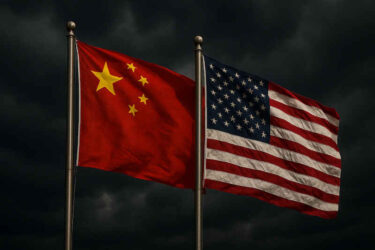
We are seeing a seismic shift in how the U.S. government engages with capitalism.
And I don’t mean a subtle, behind-the-scenes evolution…
I mean a full-blown, in-your-face reimagining of capitalism – Washington-style.
Forget the familiar playbook of tax incentives, R&D grants, and regulatory nudges. What we’re dealing with now is direct government ownership of U.S. companies.
Not in response to a national emergency… not to prevent systemic collapse… but by design.
As a free-market capitalist, I’m sounding the alarm.
Take the Department of Defense’s $400 million preferred equity investment in MP Materials (MP), which gives it a 15% stake in the company along with warrants to buy more.
Or the Trump administration’s $11 billion injection into Intel (INTC) – which wasn’t even Trump’s largess. That money came from Biden’s Chips Act. The sum amounts to a 10% equity stake.
These are not one-offs. According to White House adviser Kevin Hassett, these are the first moves into something bigger: a new industrial policy that involves picking winners, writing checks, and – who knows – maybe taking boardroom seats.
We’re told this is to protect our national security. To beat China. To win the AI arms race.
But let’s be honest… this isn’t about strategy. It’s about control.
From Capitalism to Cronyism
This new industrial policy is a Trojan horse.
On the surface, it may look like the U.S. is finally getting serious about reshoring supply chains and rebuilding manufacturing capacity.
In reality, it opens the door to something much more dangerous: politically-driven capital allocation, potentially government-run boardrooms, and special-interest distortion of markets.
Intel has been bleeding cash for years. It lost $19 billion last year and another $3.7 billion in the first half of this year. It missed the mobile revolution, got left in the dust by Nvidia and AMD in the AI chip race, and is planning to fire 25% of its workforce.
So why does it get $11 billion in government cash?
Because it has the best lobbyists. And now, it has the government as a business partner – a business partner who’s also your regulator, tax collector, customer, and legislator.
This isn’t capitalism. It’s corporatism. And it’s how China got where it is today.
China-Style Capitalism Comes to America
Let’s not forget what we’re up against. China’s rise was powered by a command economy in capitalist clothing. State-owned enterprises, party-controlled boardrooms, strategic national funds.
It worked for a time – until it didn’t. Misallocated capital. Zombie companies. Political favoritism. Corruption.
Sound familiar?
We are walking that same path. Slowly at first. Then all at once.
The Trump administration’s stake in MP Materials is structured under the Defense Production Act. It comes with a 10-year warrant, a 15% potential stake, a $150 million expansion loan, and a 10-year price floor commitment.
All this to secure domestic supply of rare earth materials. Strategic? Yes. Market-based? Absolutely not.
Commerce Secretary Howard Lutnick argues, “We should get an equity stake for our money.”
That’s not capitalism. That’s state capitalism – a hybrid model where profits are privatized, losses are socialized, and market signals are muffled by political megaphones.
When Congress Picks Winners, Taxpayers Lose
What happens when lawmakers who already have a track record of insider trading now write legislation that directly affects the companies they’re investing in?
Ask yourself: if Congress holds a 10% stake in Intel, what happens when Intel wants to lay off workers, shift production overseas, or exit an unprofitable product line? Who makes that call – the CEO, or the president?
This is the slippery slope. Today it’s Intel. Tomorrow it’s Lockheed. Then who… Nvidia?
And don’t forget the broader risk: with state involvement in strategic sectors, politically disfavored companies will be boxed out. Why would a defense contractor buy chips from AMD if Intel is effectively state-sponsored?
No Crisis, No Justification
Here’s the most damning point of all… there is no crisis. No bank collapse. No credit freeze. No unemployment spike.
The 2008 big banks and two of the three U.S. automaker bailouts were controversial, but they were justified by imminent systemic collapse.
This time? The government is buying companies during peacetime prosperity.
Scott Lincicome of the Cato Institute put it best: “This is one of the problems with government picking winners and losers in industrial policy in general.”
Exactly. This isn’t the invisible hand at work. This is the heavy hand of government.
The Rise of the Sovereign Wealth State
This isn’t just about protecting national security. Trump economic adviser Kevin Hassett has floated the idea of turning these investments into the foundation of a U.S. sovereign wealth fund.
Yes… America, the land of limited government and entrepreneurial freedom, becoming a capital allocator like Abu Dhabi or Beijing.
Rand Paul said it plainly: “If socialism is government owning the means of production, wouldn’t the government owning part of Intel be a step toward socialism?”
Even Bernie Sanders agrees… but from the other side: if the government gives out grants, taxpayers deserve equity.
That’s the problem. When the far-left and the far-right agree, you can bet the middle is about to get squeezed.
Bottom Line
This isn’t a revival of American manufacturing. It’s the beginning of the end of free-market capitalism as we know it.
It’s not socialism. Not yet. But it is state capitalism. And it is dangerous.
If we want to beat China, we shouldn’t become China.
We should unleash real American capital. Real American entrepreneurs. Real American competition.
Because if we let the state decide who wins, you can bet taxpayers will lose.
Shah Gilani
Shah Gilani is the Chief Investment Strategist of Manward Press. Shah is a sought-after market commentator… a former hedge fund manager… and a veteran of the Chicago Board of Options Exchange. He ran the futures and options division at the largest retail bank in Britain… and called the implosion of U.S. financial markets (AND the mega bull run that followed). Now at the helm of Manward, Shah is focused tightly on one goal: To do his part to make subscribers wealthier, happier and more free.