Why Long-Term Rates Are Rising Despite Rate Cuts
Shah Gilani|October 3, 2025

Too many investors think the federal funds rate is a magic number the Federal Reserve uses to control all interest rates.
They’re wrong.
The fed funds rate isn’t even a single rate – it’s a range. And lenders and borrowers in the market where fed funds trade don’t have to stay within that range.
Here’s what the fed funds rate really is: the interest rate at which banks lend money to each other overnight.
That’s it. Nothing magical about it.
It’s a critical lesson for investors to remember…
The Overnight Lending Game
Banks must maintain certain reserve levels at all times. Depending on how many loans they made or what other business they transacted on any given day, at the end of the day they may have excess reserves or fall short of their requirement.
When Bank A ends the day with excess reserves and Bank B falls short, Bank B can borrow money overnight from Bank A or any other bank with excess reserves.
Banks with excess reserves are happy to lend overnight because they earn interest. How much interest they charge depends on market conditions. While that rate usually falls within the fed funds target range, banks can charge more or less.
The rate banks actually charge for overnight loans depends on who has excess reserves, how much they have, and how many banks need to borrow to meet requirements. The overnight rate can spike far higher than the fed funds target range when banks that need substantial funds must accept whatever rate they’re offered.
The Federal Reserve’s Federal Open Market Committee meets eight times per year to assess economic data – employment metrics, inflation, economic growth, and financial risks. The committee sets a target range for fed funds. At their last meeting, they dropped the fed funds target range 25 basis points to 4.00%-4.25%. That range represents where they want federal funds to trade.
But the Fed doesn’t make banks trade overnight loans within their target range. The Fed can’t. Banks decide for themselves what they’ll charge each other for overnight loans.
The Fed’s Two Levers
The Fed uses two main tools to influence the overnight market so banks willingly lend and borrow close to the target range: open market operations and interest on reserve balances.
Open market operations: The Fed buys or sells government securities, influencing the supply of reserves (liquidity) in the banking system.
Interest on Reserves (IOR or IORB – interest on reserve balances): The Fed pays banks a rate on their idle reserves held at the Fed. Banks typically won’t lend overnight for less than what they can safely earn from the Fed. The IOR sets a “floor” under the federal funds rate.
Together, these tools allow the Fed to nudge the overnight funds market into its desired range. The actual effective rate fluctuates day by day but generally stays within or near that band.
One Rate to Rule Them All? Not Quite
Here’s the key point: the Fed has direct control over only one interest rate – the overnight federal funds rate, or more precisely, the target range for it.
All other interest rates in the economy – from short-term borrowing rates to mortgages to long-term bonds – are indirect.
The Fed influences them through expectations and the ripple effects of fed funds rate moves.
By adjusting the fed funds rate, the Fed influences short-term funding costs, which cascade through banks’ cost of funds, credit spreads, and expectations of future rates. But the Fed cannot decree the 10-year Treasury yield, mortgage rates, or corporate bond yields.
Markets price these rates based on supply and demand, inflation expectations, growth expectations, risk premia, and many other forces.
Consider longer rates: the 10-year U.S. Treasury yield and mortgage rates (especially 30-year fixed). These rates track, loosely, the long view of interest rates, inflation expectations, and risk premia. The 10-year yield is often called a “benchmark” rate for many borrowing costs in the private sector.
Why “loosely”? Because markets judge the path of future short rates (where fed funds will go), inflation outlook, growth prospects, and fiscal pressures (deficits, supply of Treasury issuance). Those judgments drive demand and supply in the bond market and determine rates.
Mortgage rates (especially long fixed ones) tie more closely to the 10-year Treasury yield than to the current fed funds rate. Lenders price many mortgages off Treasury yields plus a spread.
In fact, some analyses find the correlation between the federal funds rate and the 30-year mortgage rate is only around 70%, and with the 10-year Treasury yield perhaps 71%. This means 30% to 29% of the variation comes from other factors.
When Cuts Don’t Cut It
One important piece of evidence shows this separation clearly: when the Fed cuts the fed funds rate, the 10-year yield doesn’t always fall in lockstep. Sometimes it rises.
In September, when the Fed cut the federal funds target range by 25 basis points, the yield on the 10-year Treasury didn’t fall. It increased from close to 4% to around 4.14%.
This paradox demonstrates that the long end is driven by investor expectations, inflation fears, growth outlook, and supply-demand dynamics – more than by fed funds moves.
Think of it this way: the fed funds rate is the one interest rate the Fed controls directly. Through open market operations and interest on reserve balances, the FOMC sets the tempo of the overnight lending market.
But the rest of the interest rate landscape – from the 10-year Treasury to mortgages to corporate yields – responds to a broader set of forces: expectations, inflation, economic strength, fiscal pressure, and global capital flows.
So the next time you see the Fed cut the fed funds rate and yet 10-year yields rise, remember: that’s not policy failure. That’s markets speaking.
The Fed may set one rate, but the market sets the rest.
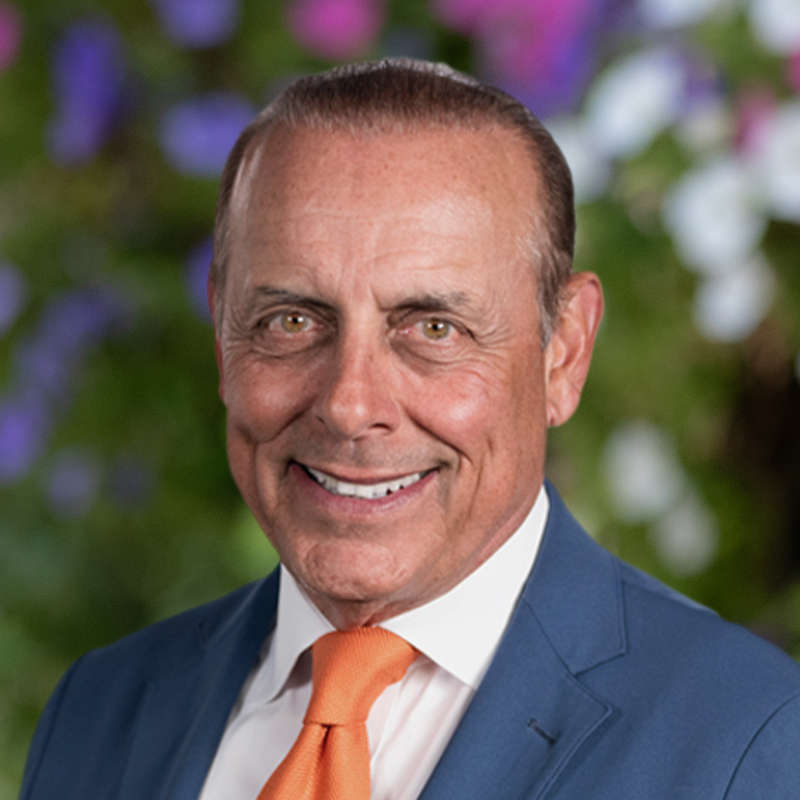
Shah Gilani
Shah Gilani is the Chief Investment Strategist of Manward Press. Shah is a sought-after market commentator… a former hedge fund manager… and a veteran of the Chicago Board of Options Exchange. He ran the futures and options division at the largest retail bank in Britain… and called the implosion of U.S. financial markets (AND the mega bull run that followed). Now at the helm of Manward, Shah is focused tightly on one goal: To do his part to make subscribers wealthier, happier and more free.