AI: It’s Not a Bubble… It’s a “Spiral Convolution”
Shah Gilani|November 7, 2025

Call what’s happening with the AI buildout arms race what you want…
Virtuous cycling, ecosystem investing, circular industrial hyper-scaling…
But when you strip it down to its core, the apparent money machine powering AI is what I’m calling a spiral convolution.
It’s a circle of companies with twisted circular financing and circular business relationships, with epic leverage and a blind-faith assumption that someday everyone in the loop will make enough money on AI to justify it all.
And it’s something all investors need to be aware of.
The Center of the Circle: OpenAI and Nvidia
Start with the center of this AI ecosystem: OpenAI and Nvidia.
Nvidia has agreed to invest up to $100 billion into OpenAI’s data center buildout, a Stargate-branded infrastructure plan that started at $500 billion when Sam Altman pitched it at the White House and has since morphed into talk of spending “trillions” on AI infrastructure.
OpenAI, in turn, commits to fill those future data centers with millions of Nvidia chips.
The money goes from Nvidia into OpenAI and then back to Nvidia via chip purchases. That’s not just a partnership – that’s an equity-funded, self-serving circular loop.
Expanding the Circle: Oracle Joins In
And that’s only one ring of the circle.
OpenAI has separate deals with Oracle, AMD, and others that, taken together, could easily top $1 trillion in AI computing commitments. Oracle, for example, reportedly signed a $300 billion deal with OpenAI to build data centers in the U.S.
Oracle then will turn around and spend billions of its own money (which it doesn’t have) on Nvidia chips to power those very same facilities.
In the most recent quarter, Oracle generated about $900 million renting out Nvidia-powered servers but made only about 14 cents of gross profit on each dollar of sales. That’s a razor-thin margin for the kind of capital expenditure they’re taking on.
It tells you who really controls the profit pool in this arrangement. Hint: it’s the chip supplier at the center of the circle, not the infrastructure landlord on the outer rings.
CoreWeave: Money Going in Circles
CoreWeave is another example of how tight and twisted this circle is.
Nvidia bought roughly a 7% stake to help support CoreWeave’s IPO, then agreed to purchase $6.3 billion of cloud services from the same company – services that essentially rent out access to Nvidia’s own chips.
OpenAI got $350 million in equity from CoreWeave ahead of that IPO and has expanded its cloud contracts with them to as much as $22.4 billion.
Money flows from Nvidia into CoreWeave, from OpenAI into CoreWeave, from CoreWeave back to Nvidia, and everyone books “revenue” and “growth.”
You can call that ecosystem synergy… but I call it spiral convolution.
XAI: Wall Street’s Greatest Hits
Then there’s Elon Musk’s XAI, which is basically doing AI using Wall Street’s greatest hits.
The company is raising $20 billion in a round built around Nvidia chips – about $7.5 billion in equity and up to $12.5 billion in debt, structured through a special purpose vehicle.
You may remember SPVs from the subprime days. SPVs were off-balance-sheet closets where banks stashed leveraged bets on subprime securities.
This SPV’s job is to buy Nvidia processors and rent them out over five years. Nvidia itself plans to put up to $2 billion of equity into that structure.
When your supplier is also an equity investor in the SPV that borrows money to buy the supplier’s product, you’re not just participating in the circle – you’re drawing it.
Enter Leverage
Of course, you can’t build a trillion-dollar circular system on equity alone. This is where leverage comes in.
OpenAI doesn’t expect to be cash flow positive until “near the end of the decade,” and one report has it burning through $115 billion of cash between now and 2029. So, in addition to partner money from Microsoft and Oracle, the company is eyeing the debt markets too.
It’s not alone.
Meta lined up $26 billion in financing for a data center complex in Louisiana that it says could eventually approach the size of Manhattan.
Vantage Data Centers is tapping a loan north of $22 billion led by JPMorgan Chase and Mitsubishi UFJ to build its own mega-campus.
That’s not “we’ll build it when the customers show up” – that’s “we’ll lever up now and pray the demand curve is real.”
What We Know So Far
The AI industry is building a massive circular financing structure where suppliers invest in customers who buy from suppliers, everyone is levering up on the assumption that trillion-dollar revenue will materialize, and the math is getting very creative.
But does the math actually work? What happens when you add up the revenue needed versus the revenue projected? And what do the returns look like so far for companies betting billions on AI?
Next week, we’ll run the numbers on this spiral convolution… and they don’t add up the way Silicon Valley hopes they will.
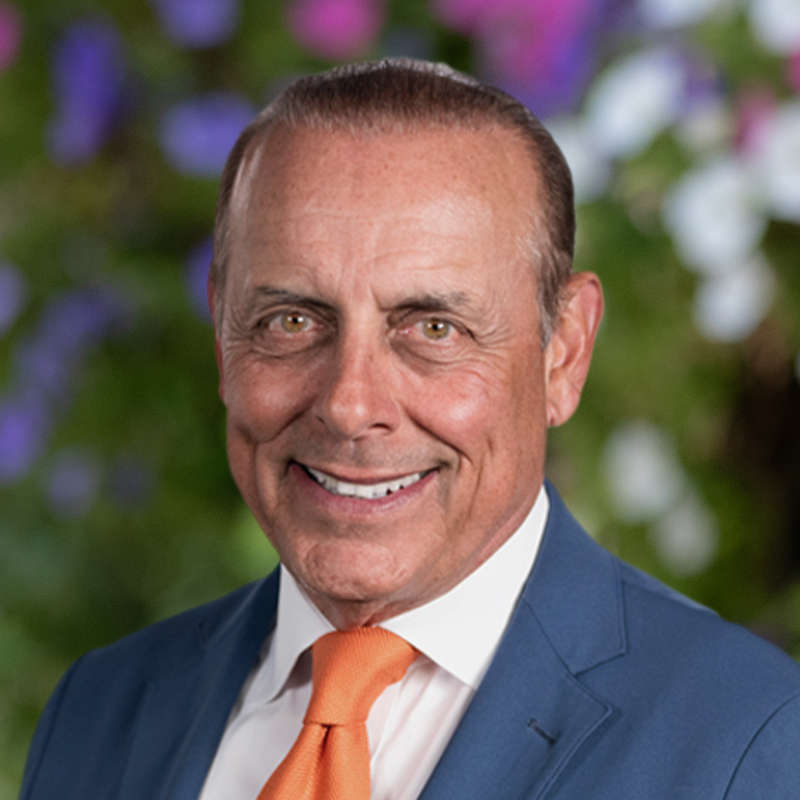
Shah Gilani
Shah Gilani is the Chief Investment Strategist of Manward Press. Shah is a sought-after market commentator… a former hedge fund manager… and a veteran of the Chicago Board of Options Exchange. He ran the futures and options division at the largest retail bank in Britain… and called the implosion of U.S. financial markets (AND the mega bull run that followed). Now at the helm of Manward, Shah is focused tightly on one goal: To do his part to make subscribers wealthier, happier and more free.