Machine vs. Human: The 80/20 Profit Split Is Here
Shah Gilani|December 5, 2025
The future of trading isn’t up for debate. It’s already here – a roughly 80/20 split between the machines that are winning and the humans who’ll survive only if they learn to ride shotgun.
Eighty percent of what works in markets right now, and what will dominate going forward, comes from AI-driven predictive analytics. These models don’t just track price action and momentum. They learn turning points, quantify them, and execute trades before humans realize anything has changed.
This isn’t fantasy. It’s the industry standard at the top of the food chain.
Look at Citadel. Ken Griffin didn’t build a $63 billion fortress by guessing. His funds run reinforcement-learning systems that analyze order-book data, microstructure patterns, liquidity depth, and volatility clusters. They detect price inflection points in nanoseconds.
In 2024, Citadel generated roughly $9.7 billion in trading revenue – up 55% from 2023 – largely from AI-driven edges. Revenue and profit in 2025 are likely to climb even higher.
Or take Jane Street, the quiet assassin of global markets. Its trading operation runs on probabilistic AI engines that model cross-asset relationships in real time. It doesn’t read charts. It reads entropy. That’s why it routinely pulls in billions in profits trading ETFs, options, and basis spreads.
Even the old guard is all in. Goldman Sachs’ machine-learning division rebuilt its trading stack around predictive signals that spot momentum exhaustion, liquidity vacuums, and microtrend reversals. Its “Autocallable AI Basket” – buried in a 2024 structured-products deck – was essentially an algorithmic attempt to front-run turning points across sectors. Goldman’s own researchers admitted the models now identify patterns “not observable through traditional analysis.”
That’s the 80%.
Fundamentals Won’t Die
The remaining 20% – the part too many investors dismiss – won’t die. Classic fundamentals still matter: earnings, margins, cash flow, competitive advantage. These signals are durable.
The twist is that timing around these fundamentals is migrating to something new: narrative-aware technical analysis, where AI constantly updates filters that measure sentiment, positioning, volume dynamics, and volatility structure around breaking news, policy moves, and market psychology.
It’s still fundamentals. Just AI-quantified and timed with precision.
Think of it this way: fundamentals provide the why, while AI-enhanced technical filters determine the when. The winners will marry both – but with the weight heavily skewed toward machines that detect turning points faster and with more precision than any human armed with a chart and coffee.
This isn’t speculation. It’s exactly what’s already been built by Renaissance, Citadel, Jane Street, Goldman… and now by me.
It’s what’s soon coming to market under my proprietary trading and investing engine. Predictive models that score momentum shifts. Systems that rank turning points. AI-updated narrative filters that identify when fundamentals align with price structure. A full 80/20 framework fused into one machine – built to do what the most profitable trading shops and hedge funds are doing, but accessible to investors who’ve never had a Citadel-level edge.
The divide is real. The future is already here. And the investors who want to make serious money won’t choose between AI and fundamentals.
They’ll use both – but they’ll weight their bets exactly where the profits already are.
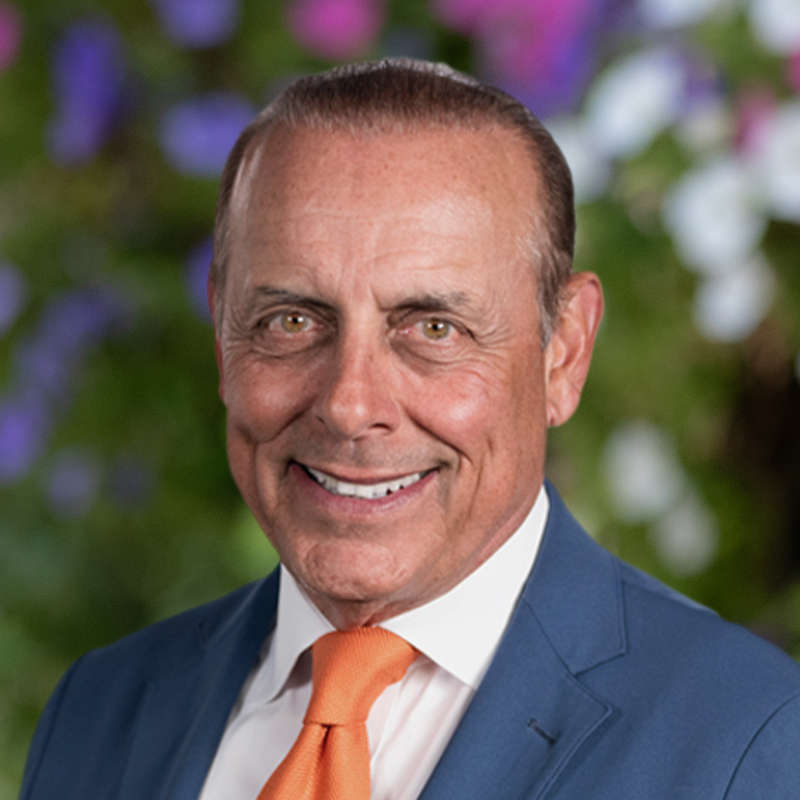
Shah Gilani
Shah Gilani is the Chief Investment Strategist of Manward Press. Shah is a sought-after market commentator… a former hedge fund manager… and a veteran of the Chicago Board of Options Exchange. He ran the futures and options division at the largest retail bank in Britain… and called the implosion of U.S. financial markets (AND the mega bull run that followed). Now at the helm of Manward, Shah is focused tightly on one goal: To do his part to make subscribers wealthier, happier and more free.