Monday Takeaways: Record Earnings Beats Battle Recession Fears
Shah Gilani|August 4, 2025
The market is getting two completely different stories…
Story #1: Friday’s jobs disaster with 250,000+ jobs erased from previous months through revisions, pushing payroll growth dangerously close to recession territory.
Story #2: Corporate earnings delivering the strongest performance in years – 82% beating expectations on both top and bottom lines.
Which narrative wins? The answer could determine whether we see Fed rate cuts in September (now 90% probability) or continued market momentum.
Adding to the intrigue: Trump’s firing of the Bureau of Labor Statistics head and his strategic Fed appointment could create a “shadow Fed” within the central bank.
Meanwhile, revenue beats are hitting 79% – far above historical averages – suggesting underlying economic strength despite employment weakness.
I’ll break down why this earnings strength might be the real story, how Trump’s personnel moves could reshape monetary policy, and whether you should “buy the dip” as we’ve been recommending since April.
Click the image below to see which economic signal comes out on top.
Transcript
Hey, everybody. Shah Gilani here with your Monday Takeaways, starting with what happened on Friday last week. Yikes.
Nonfarm payrolls grew by 73,000. The expectation was for about 110,000. Now that was a bit of a letdown, but it wasn’t the real problem. The real problem was in the revisions because the June nonfarm payrolls number initially showed 147,000 jobs gained.
That was revised down on Friday by 133,000. So June only saw nonfarm payrolls grow by 14,000. Then there was the May revision. Originally came out at 144,000 new jobs.
That was revised down on Friday by 125,000. So the true nonfarm payrolls gained in May was 19,000. The problem is any time we see nonfarm payroll growth head down around zero to maybe 10,000 a month, we’re heading into a recession. Now, we’re not there yet, but if we see a revision on July’s 73,000 down to somewhere around 5,000 to 10,000, then we have a problem.
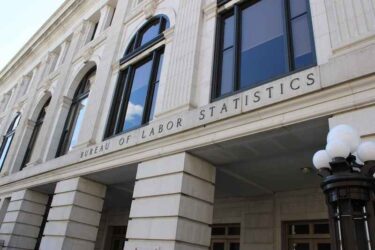
The president obviously didn’t like that, so he fired the head of the Bureau of Labor Statistics, and he’s going to appoint somebody more favorable. The question the market should have is: Is that person, whoever they may be, going to be someone who’s going to manipulate the numbers in the administration’s favor? That can never be a good thing.
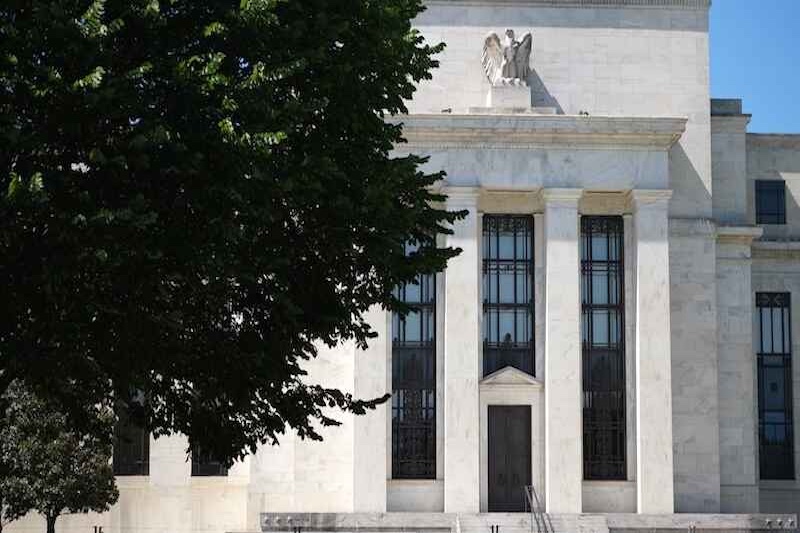
Speaking of the president firing and hiring, he gets to hire somebody new on the Federal Reserve because of the very sudden, abrupt – in my opinion, I’m just going to call it exit – of an FOMC member, a Federal Reserve Board member. That leaves the spot available for President Trump to put someone in, to nominate someone.
The likelihood is that he will nominate someone, which he said he will do in the next few days, who could possibly be the predecessor to whoever could replace Chairman Powell.
If Trump makes it known that this is his likely candidate for the next Fed chair, then you’re going to have a shadow Fed within the Fed.
That’s going to be interesting if that’s the case. And it seems possible. But even if not, there’s going to be now an administration-biased Federal Reserve member on the committee, in the Fed, appointed by President Trump. That’s going to make things interesting.
Now, the nonfarm payrolls numbers and the revisions caused the bond market to rally price-wise on Friday, and yields came down on the 10-year to 4.22%. That’s about a 14-basis-point drop in yields. So while that’s healthy, it also says, “Yikes, maybe the economy is slowing down,” and therefore the Fed is likely to cut in September. The betting on the Fed cutting in September went from about 30% to almost 90% that we will likely see a Fed cut in September.
And if things go even worse for the economy, which doesn’t look like they will because we’ve got a GDP growth print of 3% last week, then maybe we’ll talk or there will be talk of a 50-basis-point cut in September. Markets are going to like that. That’s why futures are up today. Pre-market was up nicely.
The S&P up about half a percent, the NASDAQ Composite up about three-quarters of a percent, a little more. So we’re seeing a rebound off of Friday’s sell-off.
Now, one of the reasons we’re seeing this rebound – I don’t think it’s got anything to do with the president going to nominate somebody to fill a slot at the Federal Reserve. I don’t think it’s because he’s going to rejigger the Bureau of Labor Statistics and possibly play favorites.
It’s because of earnings, people. It’s because of earnings. We got a report this morning from FactSet, which compiled some great – and always compiles great numbers – some great numbers on earnings so far.
So far, here’s what’s the cool thing. So far, for companies that have reported earnings, 82% have beaten on the top line and bottom line. Eighty-two percent have beaten top line and bottom line. That is better than the one-year average of 77% beating, better than the five-year average of 78% beating, and better than the 10-year average of 75% beating. I think that’s fabulous as far as earnings beats go.
Now, what’s even more impressive to me is beats on revenue estimates. Seventy-nine percent have beaten on revenue estimates. That’s better than the one-year average of 62% beating, better than the five-year average of 70% beating, and much better than the 10-year average of 65% of companies beating on revenue expectations. Holy mackerel.
So, earnings are good. Earnings per share are growing, and it looks like maybe we’re looking at around 10% growth in earnings for the second quarter. That’s pretty hot stuff, people. So, no wonder we’re seeing a rebound this morning in the futures.
We’re also getting some calls for “buy the dip” here if we do get any kind of dip, which I’ve been saying since April.
So, that being said, your takeaways are that markets are going to endure hiccups here and there. The thing to watch is longer term: Are nonfarm payrolls going to baseline down around zero? If they are, then there’s likely a recession coming.
And then we could see some stock market profit-taking because there’s still plenty of profits on the table, which is really what we saw on Friday. The takeaway from all this is we’re still in bullish mode until we’re not. It’s all good until it isn’t.
So hang in there, everybody. Have a great week. Cheers.

Shah Gilani
Shah Gilani is the Chief Investment Strategist of Manward Press. Shah is a sought-after market commentator… a former hedge fund manager… and a veteran of the Chicago Board of Options Exchange. He ran the futures and options division at the largest retail bank in Britain… and called the implosion of U.S. financial markets (AND the mega bull run that followed). Now at the helm of Manward, Shah is focused tightly on one goal: To do his part to make subscribers wealthier, happier and more free.