
test
Rashmi Fegade|July 1, 2019

Five All-Natural Memory Hacks
A Manward Press Special Report
Inside this special report:
|
Picture this.
You’re heading from one room to the next. You’ve got a clear purpose in mind.
Or at least you did.
But now you’re slowing down.
You stop dead in your tracks, cock your head to the side and say, “Wait… what was I doing?”
Sound familiar?
For many people, this scenario plays out daily. It may happen multiple times in a single day. Maybe even multiple times per hour.
But it doesn’t have to.
The brain is our most powerful muscle. It controls nearly all that we do. And if you want yours to function optimally… you need to treat it right.
Everyone wants a sharper memory. Unfortunately, most people think it’s impossible to boost your brain without hours of hard, tedious work.
The truth is… there are quick and easy ways to make your brain work better. At ANY age.
You’ll learn all about them in this special report from Manward Press.
Each of the strategies you’re about to discover is simple and effective. They’re also safe and natural… so you can do them every day without worry.
In fact, the more you use these tips, the better your results could be.
Best of all? None of these “memory hacks” requires any special equipment or prescription. They don’t require a trip to the doctor.
You won’t even need to leave the comfort of your own home.
So pay close attention to what follows. It could have a profound impact on your life.
Memory Hack Nos. 1 to 3: Three “Forbidden” Memory-Boosting Superfoods to Add to Your Diet Today
When we say “forbidden,” we don’t mean these foods are illicit or difficult to get. In fact, the exact opposite is true. You should have an easy time finding all three in your local grocery store. They may already be in your fridge or pantry.
The reason we say “forbidden” is that these foods have been demonized at one time or another by the mainstream media. Quack scientists have knocked them for being either too sugary or too high in fat.
But further research has proved these are bona fide superfoods. And if you make them a regular part of your diet, you too can reap the positive, memory-boosting benefits.
First up… Dark chocolate.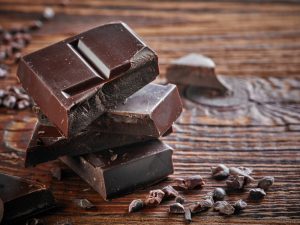
See? We told you this would be easy.
Who wouldn’t want to get more chocolate into their life?
But this is no ordinary sweet treat. According to an international team of researchers spanning the U.S., Australia, and Luxembourg, eating chocolate just once a week can lead to superior brain function.1
Looking at data reaching all the way back to the 1970s, they found that chocolate specifically helps improve memory and abstract thinking.
That means it can actually help make your everyday life easier (remembering shopping lists, phone numbers, etc.).
The study concluded:
More frequent chocolate consumption was significantly associated with better performance on the Global Composite score, Visual-Spatial Memory and Organization, Working Memory, Scanning and Tracking, Abstract Reasoning, and the Mini-Mental State Examination.
As an added bonus, dark chocolate with a high concentration of cacao (70% or more) helps fight inflammation and even has antioxidant properties.2
Add dark chocolate to your shopping list today.
And while you’re at it… write down avocado as well.
Talk about a superfood… Avocados are rich in more than a dozen vitamins and nutrients, including:
- Vitamin B5
- Vitamin C
- Vitamin E
- Vitamin K
- Folate
- Magnesium
- Potassium
- Zinc
- And more3
It’s no secret that avocados are a high-fat food. But more recent research has shown that the specific type of fat they contain – oleic acid – is actually quite powerful. It can reduce inflammation4 and may even help prevent breast cancer.5
But perhaps more exciting is how avocados impact the brain.
A Tufts University study published in Nutrients found that eating an avocado a day led to “improvement in memory and spatial working memory,” as well as “improved sustained attention.”6
Researchers concluded that “dietary recommendations including avocados may be an effective strategy for cognitive health.”
The same can be said about our third “forbidden” superfood… egg yolks.
Doctors and scientists have waffled over the years on this subject. One minute they’re telling you to eat egg whites only… the next they’re praising the yolk for its high protein and healthy calories.7
But what we’re most interested in is the choline.
Choline is an essential nutrient for memory. And egg yolks are absolutely PACKED with it.8 In fact, they’re the best food source you can eat for choline.
According to a study in the American Journal of Clinical Nutrition, people who don’t get enough choline may be more likely to decline mentally.9
As reported in Reuters:
People with higher choline intake at the outset were less likely to show areas of “white-matter hyperintensity” in their MRI brain scans. Those areas are thought to be a sign of blood vessel disease in the brain, which may signal a heightened risk of stroke or, eventually, dementia.10
Eat an egg a day to get more choline into your system and help protect your brain function.
Memory Hack No. 4: The All-Powerful “Brain Spice” That Improves Memory
Despite all our modern miracles, there’s no denying… the ancients knew what they were doing.
For example, way back in 500 B.C., the Greeks and Romans used an all-powerful “brain spice” for medicinal purposes.
It was considered sacred by the Egyptians.
And Don Quixote even used it in the recipe for his mythical balm of Fierabras.
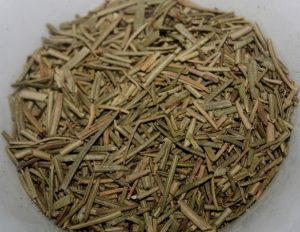
But only recently have we begun to realize the full potential of this powerful herb…
We’re talking about rosemary.
You probably know rosemary well for its delicious taste and fresh smell. But you may not know that it’s been shown to significantly improve memory… and perhaps other brain function.
A single-blind study assessed the effect of lavender and rosemary essential oils on 140 individuals. The results were stunning.
As reported in Current Pharmaceutical Design:
They found that those in the rosemary aromatherapy condition exhibited a significant enhancement of memory task performance, but with a corresponding significant reduction in the speed of memory task performance. Subjective ratings of alertness and contentedness were also increased in comparison with the no-scent condition.11
Another study concluded that rosemary, when taken orally, “could be used to boost prospective and retrospective memory and reduce anxiety and depression” among university students.12
And a third study found rosemary water has a “statistically significant” effect on cognition.13
There are lots of ways to get more rosemary into your life. You can:
- Sprinkle dried rosemary on your food
- Take a rosemary supplement
- Use rosemary essential oil
- Buy or make your own rosemary-infused water.
No matter how you do it, just make sure you start taking advantage of the memory-boosting power of rosemary today.
Memory Hack No. 5: The Simple Daily Habit That’s Been Proven to Raise Long-Term Memory by 20.6%
One of the best things you can do to build a better memory is to get better sleep.
Research shows that getting more REM sleep – the deepest stage of sleep – can boost long-term memory by 20.6%.14
That’s because REM sleep is when your brain consolidates memories and even creates strong associative connections.
But even if you’re not a heavy sleeper, a short nap can do the trick, too.
One German study found that napping for just six minutes can help improve memory and mental performance.15
Harvard researchers also looked at the effect of naps on mental ability. As reported by Harvard Health Publishing:
In the study, volunteers learned to navigate a complex maze. During a break, some were allowed to nap for 90 minutes, others weren’t. When the volunteers tackled the maze again, only the few who dreamed about it during their naps did better.
The research is clear. For better cognition, you need to prioritize good sleep.
And when you couple that with the other memory hacks we’ve covered today, you should be well on your way to a better-functioning brain.
For more natural health news, how-tos and tips, visit ManwardPress.com.